
Two weeks ago, the Presidential election finally culminated with an anti-climactic finale. All eyes fell upon the electoral college while the popular vote suffered in relative obscurity. With moderate ease, the incumbent Democrat defeated the Republican challenger after an insufferably long campaign. Swing states occupied the attention of the media to the exclusion of a large majority of the country’s registered voters. If you were not a resident of Ohio, Virginia, Pennsylvania, Michigan, Wisconsin, or Colorado, you may have felt inferior to the these highly coveted states where campaign expenditures exceeded the GDP of most countries in the western hemisphere.
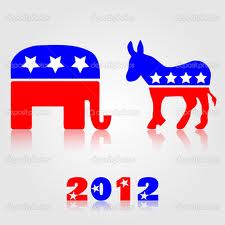 In the end, over 122 million Americans voted with 50.6% casting a ballot for the incumbent. In a free and democratic society, this is considered a majority. But as we’ve learned recently, a majority doesn’t necessarily translate into victory. Even so, 322 electoral votes cemented the winning candidate’s bid for re-election. Though the win would never be considered a landslide, a simple majority coupled with an overwhelming number of electoral votes signals a shift in the political, moral and economic landscape. A tipping point has been reached and every American will now subsist within a culture of prolonged economic deflation, moral ambiguity and political vehemence. The winner gets to write the history. In our culture, losers are typically villanized by means of historical revisionism, media pontification, and thorough marginalized behind the veneer of mob rule. Welcome to the American dream where winners are idolized and losers are demonized.
I’ve always held a vague suspicion of the majority. Perhaps my history teachers convinced me that the majority didn’t always embrace the highest principles or the greatest good. Even a cursory review of history’s greatest villains reveals how the people of Russia, Germany, and even the southern US in the early and mid-19th century espoused ideals and installed leaders who advocated pernicious worldviews. Some victories engender painful consequences.
Author Richard Rohr observed, “People think that by defeating the other side, they have achieved some high level of truth! Very sad, but that is as far as the angry or fearful dualistic mind can go.” True winners (i.e. leaders) don’t just affirm people in their self-serving, immature neuroses. As CS Lewis once wrote, “Hell is having your own way all the time.” Living in a mob-induced euphoria that only celebrates the advancement of self inevitably leads to fear, isolation and anger. In this state, the spoils of victory intensify the narcissism and diminish the soul to a place of sanctimonious condescension. In the end, this election was not about the rich and the poor, it was about transcendence and maturity. When fear and insecurity form the impetus for our actions, no level of maturity can be achieved. In this condition, our hope can only rest in the blind fanaticism of the one who affirms our fear and anger, and promises to deliver a trouble-free future. To the victor go the spoiled.
 Scott Kelly