
Lutheran pastor and theologian Dietrich Bonhoeffer’s passion to protect and purify the church from government efforts to nazify German protestants cost him his life. On April 4, 1945, in a delirious rage, Adolf Hitler issued a direct order for the execution of the Abwher conspirators being held at Flossenburg concentration camp. Upon hearing his sentence, Bonhoeffer said to an English friend, “This is the end – for me the beginning of life.” He was hanged at dawn on April 9th, just two weeks before American soldiers liberated Flossenburg camp and three weeks before Hitler committed suicide.
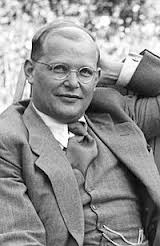 The tragic end of Bonhoeffer’s life underscores the dramatic events endured by millions of Europeans in the 1930’s. Even as Bonhoeffer fought to preserve the biblical definition and mission of the church, the rising power of Nazi oppression and control captivated the wounded and marginalized German citizens who still felt the devastating effects of the Treaty of Versailles. Rather than embrace a biblical worldview, many German Christians capitulated to the inspiring message of nationalism and racism espoused by Nazi party leaders. Charismatic leadership overpowered sound principles and ideals. Soon, many Germans were worshiping at the altar of the state while singing the anthems of Martin Luther. The transcendent hope of a utopian Germany fostered a discordant climate of government-sanctioned preaching and discipleship.
It’s unlikely Bonhoeffer would have suffered a similar fate if he lived in the United States today, though we may be creeping closer to this possibility than we know. The pain of struggle, disappointment and failure leads us into habits of misplaced hope. Without measurable success and relative comfort, we mortgage our future and our souls to appealing and mesmerizing personalities. These demagogues offer a message of hope and change, thereby giving our disappointment a name and objectifying our anger. We are told that there must be someone to blame and therefore someone has to pay for our discontent.
Bonhoeffer’s Confessing Church offered a biblical but risky alternative community in which believers could form a meaningful and Christ-centered fellowship. The goal of the confessional gathering was to eliminate the growing cancer of cheap grace and the corresponding suppression of free worship. It was common practice for German-state churches to receive money from public taxation. When we allow government to determine our financial well-being, we naturally relinquish control of our message and our calling. Why would you object to the hand that feeds you or advocate a conflicting message if doing so would lead to reduced or eliminated funding? Like some today, many Germans found that it was easier to embrace a divisive and ruinous message than form an objection on moral principle. Party alliances didn’t appeal to Bonhoeffer, so it’s difficult to project his political affiliation in today’s bureaucratic environment. Without question, he would have raised his voice in favor of limited government and warned of the easy believism of political emotion.
No party or politician can deliver transcendence or provide redemption. Change is empowered by hope and that is the essence of transformation. But misplaced hope leads to deeper despair and increased frustration. Bonhoeffer knew that his life, and the lives of his fellow countrymen, existed beyond the feverish rhetoric of politics. If we fall victim to mesmerizing speeches and hypnotic personalities, we easily forget the truth of who we are and who we are intended to become. In doing so, we sentence ourselves and our country to a dark and grievous future. Bonhoeffer’s hope was built on nothing less than Christ glorified and the correlation of limited government. For this hope, he offered his life.
 Scott Kelly